Tampa, Florida Airport People Movers
From nycsubway.org

Tampa International Airport peoplemover approaching the main terminal from Airside A, June 2000. Photo by David Pirmann.
Overview
If you're a transit fan "stuck" in Florida for a weekend, there could be worse places to spend some time than at the Tampa International Airport. No less than 7 different "lines" serve the terminal buildings.
Airside/Landside
The Tampa Airport has a unique system of "airside" pods connected to the central core by monorail-style people mover systems. Each pod is serviced by two tracks with a 1-car or 2-car shuttle going back and forth on its track. The oldest ones were installed when the airport first opened circa 1971-1975 (airside B, D, E). Both Airside B and Airside E are currently closed for rebuilding; Airside D had it's 24 year old shuttle cars replaced within the past few years. The newest pods, Airside A and Airside F, have two-car trains on each track. The cars are serviced at the airsides, a bay underneath the platforms is visible when arriving at Airside A, for instance. The platforms have edge doors that resemble elevator doors. The Airside A line is somewhat different from the others; it is curved and slopes downhill from terminal to pod. It takes approximately 45-60 seconds to travel between terminal and pod.
Parking Decks
The short-term and long-term parking decks are connected on Level 5 by a people mover loop system. There are three stations in the terminal (well, it's really four but one is on a single-track section and the car doors open on both sides- they call this two stations), and four in the parking desk, each named for a famous aviator. The small cars change ends at the single track stub at Sikorsky/Yeager station, stop at Armstrong station (still in the terminal building) and run in a counterclockwise loop around the parking structure (making stops at Wright, Jannus, Goddard, and Lindberg stations) before returning to the terminal, with a stop at Earheart station (directly across from Armstrong station). Inside the parking structure there is a loop track for holding out of service cars. The cars operate similar to a horizontal elevator. Each station has a monitor showing the locations of the cars and there is a "press to call" button like an elevator. You can also walk between the stations along the trackway, which is on the other side of a fence.
Photo Gallery
| Five Random Images | ||||
 Image 13214 (245k, 1044x788) Photo by: David Pirmann Location: Airside A | 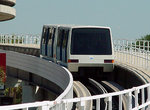 Image 13216 (233k, 1044x788) Photo by: David Pirmann Location: Airside A |  Image 13217 (241k, 1044x788) Photo by: David Pirmann Location: Airside A |  Image 13238 (318k, 1044x788) Photo by: David Pirmann Location: Airside C |  Image 13243 (328k, 1044x788) Photo by: David Pirmann Location: Airside D |
Page Credits
By David Pirmann.